Thursday, September 19, 2013

NEWS UPDATE!! Rep. Tim Murphy Announces Important Mental Health Legislation


Bravo -- BIG NEWS from Congressman Tim Murphy, who is willing to stand up for what is needed. The US can spend billions on space travel and fighting wars in other countries ... but we can't seem to figure out how to help "our nation's" more vulnerable citizens. IT IS TIME.  gg burns

read review by Mental Illness Policy.org here:
Mental Illness Policy Org: Rep. Tim Murphy Announces Important Mental Health Legislation


IN THE NEWS: HOUSE MEMBER OUTLINES MENTAL HEALTH PROPOSALS, CITING NAVY YARD SHOOTING


By Melissa Attias
Sept. 19, 2013

A key House leader on mental health announced Thursday that he will be introducing legislation soon to boost treatment options and address other challenges, noting that Monday’s deadly shooting again “raised the issues of how we are handling mental health to stop this terrible violence.”


Pennsylvania Republican Tim Murphy, chairman of the Energy and Commerce Oversight Subcommittee, outlined the package in a floor speech, noting that the gunman who killed a dozen people at the Washington Navy Yard had a history of mental health issues. Murphy’s panel has been examining current mental health policies since the start of the 113th Congress, convening a forum and hearings earlier this year.

“The background checks does not even begin to deal with the millions of people who have a psychiatric illness and go untreated,” Murphy said. “There is a lack of inpatient and outpatient treatment options and we need to begin, finally, to deal with these problems.”


The proposal, expected to be introduced in a couple of weeks, appears to offer a different approach to mental health than the legislation (S 689) that was approved by the Senate Health, Education, Labor and Pensions Committee and incorporated into a gun control package (S 649) by a vote of 95-2. Murphy expressed skepticism of that bill earlier this year, maintaining that the effectiveness of the programs proposed in the measure is unknown.


Murphy said his bill will increase the options available for individuals who need inpatient and outpatient treatment. He said that psychiatric beds have decreased from 500,000 in 1955 to less than 40,000.


Read more here: http://murphy.house.gov/latest-news/in-the-news-house-member-outlines-mental-health-proposals-citing-navy-yard-shooting/

It is time for the public to say, NO MORE ...

This sickens me to comment on yet another preventable tragedy. Yet, if a person called the police in your city and said "I am hearing voices and someone is sending vibrations to me via a microwave machine" ... what would the police do? Would they just walk away making 'crazy jokes' as they left? Or would they call for a medical professional to come evaluate the person to see if perhaps they could take him to a "hospital". 
They would if he was having a heart attack!
When are we going to learn that a break in the brain, is no different than a malfunction of the heart? And what if the person experiencing acute psychosis was afraid or was too paranoid to go for help, 'even' if it was offered? What would happen if this took place in Lexington, KY today? What if you go to work tomorrow and a person having a psychiatric break -- was not treated as a medial emergency? What if he or she found he or herself a gun? It is time for the average tax paying citizen to call their legislators and congressman or women -- to demand state and federal change!  
It is time for the public to say, NO MORE ...
 ~ GG Burns, Mother, advocate for "treatment before tragedy"

Mass Killing at Navy Yard Could Have Been Prevented

Aaron Alexis a “classic example” of what 50 years of failed mental illness treatment policy have produced, according to the Treatment Advocacy Center.

  • Share on TwitterShare on FacebookShare on Google+Share on LinkedInEmail a friend
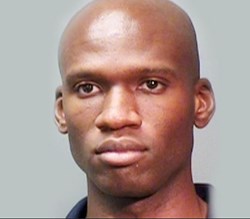
Mass shooter Aaron Alexis
This is a classic example of the failure of our mental health system – and the price we all pay for that failure.
Arlington, Virginia (PRWEB) September 18, 2013
Shot by a man whose hallucinations were so serious he called police in terror barely a month ago, the 12 people killed last Monday at the Navy Yard in Washington are the latest victims of America’s failed mental health policies and civil commitment laws that need to be improved, the Treatment Advocacy Center said Tuesday.
“This is a classic example of the failure of our mental health system – and the price we all pay for that failure,” said Doris A. Fuller, Treatment Advocacy Center executive director. “Aaron Alexis was clearly suffering an acute psychiatric crisis. He was like a man in the grip of a terrible heart attack. But because of our dysfunctional approach to mental illness treatment and weak civil commitment laws in the state where he was deteriorating, he wasn't treated like the victim of a severe medical emergency. Now, 13 people including Alexis are dead, eight more are injured, and the lives of innumerable others are forever changed.”
Failed Federal Policies
Passage of the Community Mental Health Act of 1963 and the resulting wholesale closure of public psychiatric hospitals decimated the inpatient system that once provided care for the most acutely and chronically mentally ill individuals. Today, the nation has 5% the number of public beds it had in the late 1950s, and untreated mental illness is a factor in an estimated 50% of rampage killings and 10% of all homicides, Fuller said. It is also a major contributor to homelessness, jail and prison overcrowding,
victimization of individuals with mental illness and suicide.
“Research shows that individuals receiving effective mental illness treatment are no more likely to
commit violent acts than the general public,” she said, “but the system for providing timely and
effective treatment to those most at risk for violence has been dismantled and nothing has replaced it.”
Weak State Civil Commitment Laws
At the same time, we were emptying the nation’s psychiatric hospitals, civil commitment became
increasingly limited to individuals demonstrating an imminent danger to themselves or others,
the executive said.
Rhode Island provides a case in point.
Just over a month ago, Newport, Rhode Island, police responded to a call from shooter Aaron
Alexis’s hotel room, where he told officers he was being followed by someone who “had sent
three people to follow him and to keep him awake by talking to him and sending vibrations to
his body” via a microwave machine. Alexis, 34, moved to three different hotels in a single night t
o elude the voices and the people he believed were sending the vibrations, according to a police
 report provided to the media.
The responding officers told Alexis to stay away from the individuals he thought were following
him and concluded, “No further action was required.”
“Under the laws of some states, Alexis could have been taken to a hospital for emergency 
evaluation,” said Fuller, “but in the absence of violent or suicidal acts or threats, it appears 
he was not considered committable in Rhode Island,” which requires that an individual with 
mental illness demonstrate “likelihood of serious harm” to qualify for involuntary treatment.
The Treatment Advocacy Center is a national nonprofit organization dedicated to eliminating
barriers to the timely and effective treatment of severe mental illnesses. The nonprofit promotes
laws, policies and practices for the delivery of psychiatric care and supports the development
of innovative treatments for and research into the causes of severe and persistent psychiatric
illnesses, such as schizophrenia and bipolar disorder.
The organization does not accept money from pharmaceutical companies. The American
Psychiatric Association awarded the Treatment Advocacy Center its 2006 presidential
commendation for "sustained extraordinary advocacy on behalf of the most vulnerable
mentally ill patients who lack the insight to seek and continue effective care and benefit
from assisted outpatient treatment.”
Jamie Mondics 
Treatment Advocacy Center
703-294-6003
Email 

Thursday, August 22, 2013

Suggestions on how Kentucky can improve their AOT law


NAMI-Kentucky State Conference Louisville, KY

"The Untapped Power of AOT"

July 20, 2013


By: Brian Stettin, Policy Director
Treatment Advocacy Center 


The Consequences of Non-Adherence: Budgetary Impact
n Lawenforcement,incarceration,and hospitalization are enormously expensive.
n Patientscaughtintherevolvingdoor are stressing the CJ & MH systems beyond the breaking point. 

Constitutionality Upheld
“The restriction on a patient's freedom affected by a court order authorizing assisted outpatient treatment is minimal, inasmuch as the coercive force of the order lies solely in the compulsion generally felt by law-abiding citizens to comply with court directives.”
Matter of K.L., 1 N.Y.3d 362 (2004)


Linking Anosognosia and Non-Adherence
Psych. Services 2/06:
• Of300patientswithnon-adherence tracked, 32% found to lack insight.
• Those32%hadsignificantlylonger non-adherent episodes, more likely to completely cease meds, have severe symptoms, be hospitalized

Lessons from the Field
AOT works
Fears of negative consequences are unfounded
Court order matters
Length of AOT period impacts sustainability of gains
Patient engagement is critical

AOT Works:Harmful Behaviors
2005 NYS-OMH study compared 1st 6 mos. under AOT to 6 mos. prior:
55% fewer recipients engaged in suicide attempts or physical harm to self; 
49% fewer abused alcohol; 
48% fewer abused drugs; 
47% fewer physically harmed others; 
46% fewer damaged or destroyed property; and 
43% fewer threatened physical harm to others

AOT Works:Arrest and Hospitalization
2009 NY study results (Duke et. al.):
Likelihood of arrest over 1-month period cut in half (3.7% to 1.9%)
Likelihood of hospital admission over 6-month period cut in half (74% to 36%)
“Substantial reductions” in hosp days (most expensive form of treatment)
44% decrease in harmful behaviors

Fears of AOT are Unfounded
AOT recipients no more likely to feel coerced by mental health system
AOT recipients report no greater sense of stigma
Impact on quality of voluntary services was POSITIVE

The Court Order Matters
Comparison of AOT patients to AOT-eligible “voluntaries,” with equal quality of services, found:
“Highly statistically significant” difference in the likelihood of a hospital admission over six months (36% vs. 58%). 
AOT patients less likely to be arrested than “voluntaries” (1.9% per month vs. 2.8%) 
AOT patients had a substantially higher level of personal engagement in their treatment (55% “good” or “excellent” vs. 43 percent).

AOT in Kentucky??
Implied in the KY INPATIENT commitment standard:
• 202A.026: Invol hosp requires finding:
Mental illness
Danger (or threat thereof)
Can “reasonably benefit from tx”
Hospital is “least restrictive alternative mode of treatment presently available.”

AOT in KY: Limitation #1
AOT only available to person who meets the first 3 criteria for INPATIENT commitment, including current danger.
“substantial physical harm or threat of substantial physical harm upon self, family, or others[.]” § 202A.011(2)

AOT in KY: Still More Limitations! (§ 202A.081)
Tiny window of availability (“Following prelim hearing but prior to completion of final hearing”)
Super-short period of AOT     ...    (60 days, renewable 1x for 60 more)
No consequence for non-adherence

2013 HB78 (Burch) / SB33 (Denton)
“Following the prelim hearing but prior to the completion of the final hearing”
Increases max length of INITIAL AOT  (not renewal) from 60 to 180 days
Non-adherence “may result in invol hosp, provided the criteria set forth in this chapter are met.”
Providers “shall use evidence-based practices.”

A Better KY Bill in 2014?
Establish AOT eligibility criteria distinct from inpatient criteria, so person need not be presently dangerous.
Separate AOT and inpatient processes
1 year order period, always renewable
Non-adherence as presumptive grounds for need for evaluation


NAMI KY presented the 'Legislator of the Year Award' to Rep Tom Burch and Sen Julie Denton


Sunday, August 4, 2013

When one picture is worth a thousand words! Another example why 72 hour holds do not work!

Each week across the US, dozens of reports similar to this are published. It is time we turn the direction of the chart -- more treatment, less jails!

The costly Criminalization of the mentally ill


When one picture is worth a thousand words:
Read the entire article here:
http://www.economist.com/news/united-states/21582535-costly-criminalisation-mentally-ill-locked?fsrc=scn%2Ftw%2Fte%2Fpe%2Flockedin
Quote from:
"We have not de-institutionalized...we have re-institutionalized into places of punishment! This is how we treat those suffering brain disorders? (aka: mental illness) You have the civil liberty to homeless and cognitively impaired>its not a danger to "pee in the alley" but you will get arrested  ... and hopefully not charged with a "sex crime" of indecent exposure ... Its a sad statement on humanity."

Friday, August 2, 2013

Is the CJS a dumping ground for the severely mentally ill? Why 72-hour holds don't work and AOT does!

John Hockenberry Radio Show on Assisted Outpatient Treatment features Mental Illness Policy Org friend Margaret and the author of the study:

Click here to listen to the interview: http://www.thetakeaway.org/2013/aug/02/law-requires-those-severe-mental-illness-receive-treatment-saves-states-money/

Friday, August 02, 2013

A New York State law requires people suffering from severe mental illness to receive treatment when they are not hospitalized. Kendra’s Law was passed by the state as a response to the death of Kendra Webdale in 1999. She was pushed to her death on a New York subway platform by a diagnosed schizophrenic man. At least 44 other states have issued similar laws. In the case of the New York law, a patient must have been committed to a hospital at least twice within the past three years, and must have displayed violent behaviors toward him or her self or others within the past four years in order to qualify for what’s called assisted outpatient treatment, or AOT.

AOT provides patients with a caseworker who ensures that they are attending therapy and taking their medications. The law has caused a fair share of controversy, given that the person is forced to undergo treatment. But a new study shows that the law is not only beneficial to those who are forced into therapy, but ends up saving states money in the long-term.

Dr. Paul Appelbaum , director of the Division of Law, Ethics and Psychiatry at Columbia University’s medical school explains the law.

Margaret, whose son has been forced into assisted outpatient treatment under the law, shares her story.

Tuesday, July 30, 2013

When Cops Do It Right…

Imagine your child having a brain disorder and you were in this Mom's shoes. If you have a family member or friend who works in law enforcement, please share this story. It could save a life!
 _______________________________

By Laura Pogliano

I just called the county police precinct that services my neighborhood, but not to complain. I wanted them to know that their officers, and one in particular, were ‘getting it right’ in their response to psychiatric emergencies.


My 22 year old son has schizophrenia, the paranoid type. Since February, he has phoned emergency services five times, to ask for help with physical symptoms he’s imagining. Sometimes it’s a heart attack, sometimes his throat is closing, and yesterday, it was to report a gunshot wound, which he didn’t have, to his head. He thought he’d heard a group leader at his psychiatric rehab program say, Who wants directions to Zac’s house? earlier in the day. That delusion frightened him and by night time, he thought he’d been shot in the head…He phoned 911 to report it.


Each time he calls 911, I almost panic. Police have weapons, and there is no shortage of news articles about tragic incidents when police are called to intervene in a psychiatric crisis. Police intervention should not be the route the severely mentally ill have to take to get to care, but it is. The new mental health page the White House put up advises you to call 911 for care, as the official recommendation. As bizarre and sickening as that seems, that you have to call the police when your child is sick, the fact is that they are our new front line for care and our new first responders. 


We waited outside and my son asked me to let him do the talking. He didn’t want them to know he was sick, it would interfere with his reporting the gun shot. A female officer arrived, Officer Langford. My son met her on the sidewalk. She asked his name, shook his hand politely. She asked him what was wrong. He told her he wanted to report being shot in the head. Where were you shot, can you show me? She asked. He pointed to both temples. There was nothing there. She said, oh, I see what you mean. I do see a little spot right there. He told her he was worried about losing brain cells. He thought he’d been shot right in his own bedroom. She asked with what? A pistol, he thought, but he wasn’t sure. She asked when it happened; he didn’t know. He just wanted to report his gunshot wound.


Can I check your pockets? She asked. Do you have anything sharp on you that could hurt me? He said no, and she gently patted his pockets. Then she thanked him for letting her check.


She looked at me, questioning; she took a few steps toward me, and I whispered, He has schizophrenia. Another officer arrived. Before he could approach Zac, Officer Langford leaned in close to him and whispered something. He looked at me: Is he taking medicine? I said yes, faithfully. He handed me a note with a hotline number to call in case of crisis. I asked him to introduce himself to Zac since we need to get to know the police in our area (unfortunately). He shook Zac’s hand, introduced himself and then said he had another call to go out on and left.


What Officer Langford did next was miraculous.


She told Zac, I’m going to go to the car now, and I’m going to check all our databases and see what they say. You wait right here, and I’m going to check the databases for you and find out who’s responsible, ok? We have a lot of databases I can check for you and see how this happened. He agreed to wait. You just hang on, I’m going to check for you! She looked at me. I said quietly, there’s nothing wrong. What are you doing? She said, I know, I’m just going to pretend to check…Ok?


When she came back from the car, she told him: I checked all the databases, we have a lot of them, I checked every single one, and I didn’t find anything at all. No one can get your address, there was no one listed except us, and we’re the police. Nobody can get your address, not your friends or people at the school, nobody. OK? He said he’d heard a group leader giving out his address at the hospital program he attends. He heard him ask, Hey, who wants Zac’s address?
She told him, You know, sometimes people at school or your friends--they just like playing with you. They just tease or say things to cause trouble. I have kids at home, and I know how kids can be, they just like to say things and cause a little trouble. But you don’t have to worry about that. I just checked the databases for you, all of them, and nobody can get your address except us, and now you can laugh if that happens again. You can laugh because you know, if they’re playing you, the police told you nobody can get your information. It can’t happen ok? He agreed. 


I’m trying not to tear up as I relate this next piece:  She asked, is there anything else I can do to make you feel better right now?


He said, Well, no. But did she think he should get his head wound checked out?
She said, oh, I don’t think so. I’ve seen that injury before, lots of times. She rubbed the spot on his temple that he indicated had a bullet hole. Yep, I’ve seen that before, it should clear up by itself in a couple days. Ok?


He said Ok, but it was obvious he was worried. She repeated it a few more times: I’ve seen that before, it should be ok, it’ll be fine in 4 or 5 days, Ok?
She told Zac she couldn’t stay, she had another call to go on, but she was positive he would be fine in a couple days. She told him to have a good night, we thanked her, and she left.


I couldn’t believe my eyes and ears: if she wasn’t trained in CIT and from a pro, she was undoubtedly the most compassionate police officer I’ve ever met, not to mention very skilled in handling psychiatric patients. She validated his concerns; she had an immediate solution for calming him; she asked how she could make him feel better; she addressed every worry he presented, without once asking if he was sick, if he took his medicine; without once ridiculing the delusion.


This morning, I took great pleasure in phoning the Towson precinct and asking that someone tell her sergeant, or captain, or whoever supervised her, to thank her; I have friends whose children with psychiatric illnesses have been tasered, beaten, even shot at…Officer Langford treated my son with respect, with incredible skill, with patience and compassion. I said that Officers like her were so necessary to our journey. And while we’ve met many of your officers as they’ve responded to psych calls here, she went above and beyond what could even be reasonably expected of any of them. She made a fearful young man feel better, something I often cannot do. The officer who answered the phone said she would be glad to pass the message along; most of the calls they got were complaints. I said, I believe you. But this officer needs to be held up as an example of Doing It Right! 


My son came in the house after that experience, drank some juice, got ready for bed. He knocked on my bedroom door. He had his pills in his hand and a glass of water. He took them in front of me, said good night, then lay down to sleep.
There are myriad ways the police visit could have gone wrong. But it didn’t, because a police officer was willing to do whatever she had to, to make a scared and worried young man feel better, and she did.


NEW STUDY FINDS AOT SAVES MONEY. WHY AREN'T MORE STATES USING IT?

THE EVIDENCE IS IN: For people who deny they have a serious mental illness, refuse treatment and cascade into out-of-control behavior that can be threatening to themselves or others, assisted outpatient treatment works. It also saves more money than the costs of hospitalization or jail. Policymakers who say it is too expensive no longer have an excuse not to provide this life-saving tool.

NEW STUDY FINDS AOT SAVES MONEY. WHY AREN'T MORE STATES USING IT?

banner-hp

It just got a lot harder for opponents of court-ordered outpatient treatment for mental illness to argue that it costs too much to use.

A study of mandatory outpatient treatment costs published today in the American Journal of Psychiatry found that use of assisted outpatient treatment (AOT) can vastly reduce overall costs of mental health services for persons with serious mental illness.

 “Common sense has always argued that treating people with severe mental illness is a lot cheaper than hospitalizing people or leaving them to suffer other consequences of being untreated – not to mention more humane,” said Doris A. Fuller, executive director. “Now Duke University and its research partners have produced the numbers to validate it.”

“The cost of assisted outpatient treatment: Can it save states money?” by Dr. Jeffrey W. Swanson of Duke and six other researchers reports that service costs for 634 frequently hospitalized patients with severe mental illness declined 50% in New York City – from $104,753 to $52,386 – in the first year they received AOT after psychiatric hospitalization and dropped another 13% the second year.

Even larger cost savings were reported in five suburban New York counties also analyzed in the study.

Swanson and fellow researchers analyzed the costs of providing program, selected legal and court services and mental health and other medical treatment to people who met the strict criteria for New York’s involuntary outpatient treatment program (“Kendra’s Law”). Dramatic  savings were realized even though the cost of providing outpatient services to people under Kendra’s Law AOT orders was higher.

The researchers said that by saving money with greater use of AOT, mental health agencies could actually find themselves with more resources to meet other mental health needs.

“Unfortunately, compassion for those suffering these consequences as a result of untreated symptoms of severe mental illness has not been enough to motivate most communities to put their AOT laws to work,” Fuller said. “We hope the prospect of saving their taxpayers money will.”

Read our complete statement on the study.
Read the abstract for "The Cost of Assisted Outpatient Treatment: Can It Save States Money?".

Read coverage in the New York Times, "Program Compelling Outpatient Treatment for Mental Illness Is Working, Study Says."

 Treatment Advocacy Center
200 N. Glebe Road, Suite 730, Arlington, VA 22203
703 294 6001/6002 (phone) | 703 294 6010 (fax) |
www.treatmentadvocacycenter.org